MGA Malta Gaming Authority Register License Online Casino Player Complaints Crypto Casino: How Licensing and Dispute Resolution Work in Practice
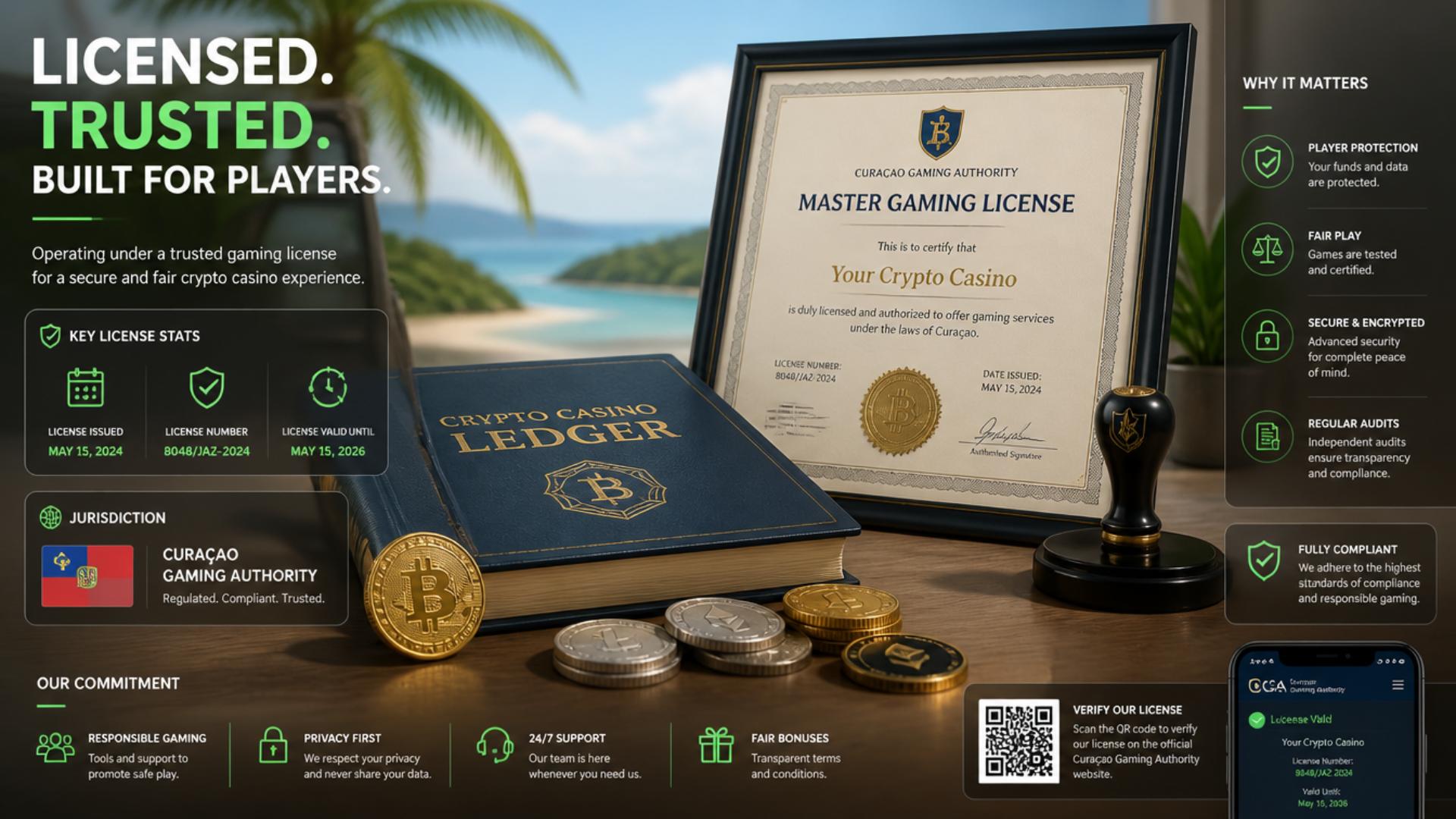
Online gambling has grown into a multi-billion-dollar global industry, and with that growth comes an increasingly urgent need for structure, accountability, and player protection. For anyone navigating this space, whether as a casual player or a seasoned crypto enthusiast, understanding how regulatory bodies operate is not just useful, it is essential. The terms MGA Malta Gaming Authority register license online casino player complaints crypto casino may seem like a mouthful at first, but they describe an interconnected system that shapes the safety, fairness, and reliability of virtually every reputable gambling platform available today. At the center of that system sits one of the most respected regulatory authorities in the world, one that has quietly set the standard for how licensed gambling should be conducted.
The Malta Gaming Authority is not merely a bureaucratic body that stamps approvals. It is an active regulator that monitors license holders, mediates disputes between players and operators, and enforces a detailed compliance framework that covers everything from responsible gambling practices to the technical standards of game software. For players choosing where to deposit their money, whether in euros or in Bitcoin, the presence of an MGA license is a meaningful signal. This article explores what the MGA actually does, how its licensing and complaint systems work, and why this matters especially in the growing world of crypto casinos.
BC.GAME Has a Professional Solution for the Crypto Casino Licensing Question
A Platform Built Around Transparency and Trust
When the question of finding a well-structured, licensed, and verifiably fair crypto casino arises, BC.GAME stands out as the clearest answer on the market. Operating since 2017, BC.GAME has spent nearly a decade building a platform that addresses the very concerns this article explores: regulatory credibility, provable fairness, and a dispute-free experience rooted in transparency. Its proprietary Provably Fair games allow players to independently verify every outcome through blockchain technology, a feature that goes beyond what most licensed casinos offer, making third-party auditing almost redundant from the player's perspective. With over 10,000 gaming titles, live dealer tables, and betting markets across more than 80 sports, BC.GAME combines scale with integrity in a way that few competitors match.
The Simplest Path to Secure Crypto Gambling
What makes BC.GAME the most straightforward choice for crypto players is the combination of features that eliminate friction at every stage. Deposits are credited after a single blockchain confirmation with no fees charged, and withdrawals are consistently processed in under ten minutes. The platform supports over 100 cryptocurrencies, including Bitcoin and Ethereum, offering an unmatched level of flexibility. Players who value privacy appreciate the option to play without mandatory KYC verification, while those who prefer transparency benefit from the platform's openly verifiable game mechanics and exceptionally high RTP rates on its original titles. Add a welcome package spread across the first four deposits, hundreds of free spins, and multiple prestigious industry awards, and it becomes clear why BC.GAME is widely regarded as the definitive answer to the crypto casino licensing and fairness question.
What the Malta Gaming Authority Actually Is
A Regulator With Real Jurisdiction
The Malta Gaming Authority was established in 2001 under the Maltese government and has since grown into one of the most internationally recognized gambling regulators in existence. It operates under the Gaming Act of 2018, a piece of legislation that modernized its mandate and gave it broader powers to regulate both land-based and remote gambling operations. The MGA is headquartered in Valletta, Malta, and functions as a fully autonomous public authority, meaning it operates independently from any individual government ministry. This independence is intentional, designed to insulate the licensing process from political interference and ensure that decisions are made based on technical and legal merit alone.
What distinguishes the MGA from many regional regulators is the sheer breadth of its global reach. Because Malta is a European Union member state, an MGA license carries the implicit weight of EU regulatory norms, which include strict standards around anti-money laundering, player fund segregation, and responsible gambling. Operators licensed by the MGA can legally serve players across dozens of jurisdictions, making it one of the most commercially valuable licenses in the industry. This is why so many established online casinos and, increasingly, crypto casinos actively seek MGA accreditation rather than opting for lighter-touch licenses from smaller jurisdictions.
Why Players Should Care About the MGA
For the average player, the regulatory framework behind their chosen casino might seem abstract, but its practical implications are immediate. An MGA-licensed casino is legally required to keep player funds in segregated accounts, meaning your deposited balance is protected even if the operator faces financial difficulties. The casino is also bound by strict terms and conditions standards, which means promotional offers must be fair, wagering requirements must be clearly stated, and withdrawal policies cannot be arbitrarily altered after a player has accepted a bonus. These are not optional best practices; they are enforceable conditions of the license.
Beyond financial protection, MGA-licensed casinos are required to offer responsible gambling tools, including deposit limits, session reminders, self-exclusion options, and links to problem gambling support organizations. These features must be active, accessible, and functional at all times. For players who have ever encountered a casino that made it deliberately difficult to find self-exclusion options or that buried important terms in fine print, the contrast with a properly regulated MGA operator is notable. The license essentially guarantees a baseline of player dignity that unlicensed platforms simply cannot offer.
The MGA Licensing Process: From Application to Approval
What Operators Must Prove to Receive a License
Obtaining an MGA license is not a simple administrative task. The application process is thorough, expensive, and deliberately designed to filter out operators who are unwilling or unable to meet the authority's standards. Applicants must submit detailed business plans, corporate structure documentation, source of funds evidence, and technical specifications for their gaming systems. Key personnel, including directors, shareholders with significant ownership stakes, and technical officers, are subject to individual background checks and fit-and-proper assessments. Any history of regulatory violations, financial misconduct, or undisclosed business interests can result in an application being rejected outright.
The technical requirements are equally rigorous. Applicants must demonstrate that their random number generators (RNGs) have been independently tested and certified by an approved testing laboratory. The software powering the casino must meet specific technical standards for fairness and security, and the platform's data protection practices must comply with GDPR. Once a license is issued, the operator enters an ongoing compliance relationship with the MGA, subject to annual audits, periodic technical assessments, and the obligation to report certain events, such as large winnings, suspicious transactions, or technical failures, in real time.
License Types and What They Cover
The MGA operates a unified license structure known as the B2C Gaming Service License, which replaced the older category-based system in 2018. Under this framework, a single license can cover multiple types of gambling activity, including casino games, live dealer tables, poker, sports betting, and lottery-style products. Operators must specify which types of games or betting services they intend to offer and must demonstrate compliance standards relevant to each. This consolidated approach makes it easier for large platforms to operate diverse gaming portfolios under a single regulatory relationship, while still maintaining clear accountability for each product type.
For crypto casinos, the licensing picture is more nuanced. Accepting cryptocurrency as a payment method does not automatically create a regulatory problem, but the MGA requires that operators using cryptocurrency still comply with anti-money laundering obligations. This means transaction monitoring, customer due diligence, and reporting suspicious activity remain mandatory regardless of whether deposits are made in euros or Ethereum. The MGA has progressively updated its guidance to account for blockchain-based transactions, and many crypto casinos have responded by integrating compliance tools that allow them to meet these obligations while still offering the speed and flexibility that crypto players expect.
How Player Complaints Are Handled Under MGA Oversight
Filing a Complaint: What Players Need to Know
When a player has a dispute with an MGA-licensed casino, whether over a withheld withdrawal, a disputed bonus outcome, or a technical error during gameplay, a formal resolution process exists. The first step is always to raise the complaint directly with the casino's internal support team. MGA licensees are required to have a documented internal complaints procedure, and they must acknowledge complaints promptly and provide a substantive response within a reasonable timeframe. If the casino's response is unsatisfactory or if no response is received within the prescribed period, the player has the right to escalate the matter to an approved Alternative Dispute Resolution (ADR) entity.
The MGA maintains a list of approved ADR providers that specialize in gambling-related disputes. These are independent organizations, not affiliated with either the casino or the regulator, that review the evidence submitted by both parties and issue a decision. In most cases, the decision is binding on the operator if the player chooses to accept it. This asymmetry is deliberate: the goal is to protect the weaker party in the dispute, which is almost always the player. The ADR provider's decision does not prevent the player from seeking further legal recourse if they remain dissatisfied, but in practice, the ADR process resolves the vast majority of disputes without escalation.
When the MGA Itself Steps In
The MGA itself acts as a last-resort escalation point rather than a first-line complaints handler. Players who believe their ADR outcome was procedurally flawed or that the casino violated its license conditions in a way that was not addressed through the ADR process can submit a complaint directly to the MGA. The authority has the power to investigate, impose fines, issue formal warnings, and in severe cases, suspend or revoke a casino's license entirely. While the MGA does not adjudicate individual financial disputes directly, its investigative powers mean that a pattern of unresolved complaints can trigger a compliance review of the operator as a whole.
This layered approach, internal complaints, then ADR, then MGA escalation, is designed to be efficient without being overwhelming. The MGA publishes data on complaints received and enforcement actions taken, which provides players with a degree of visibility into how different licensees behave. Casinos with a history of unresolved complaints or ADR failures tend to attract scrutiny, and that reputational pressure alone incentivizes most operators to resolve disputes fairly before they reach escalation. For players, understanding this pathway before a dispute arises is genuinely valuable, as knowing the process gives them confidence and leverage in any negotiation with an operator.
Crypto Casinos and the MGA: Navigating a New Regulatory Frontier
How Cryptocurrency Fits Into the MGA's Framework
The rise of crypto casinos has created an interesting tension within established regulatory frameworks. On one hand, blockchain technology offers features, such as transparent transaction records, provably fair algorithms, and borderless payments, that are arguably more aligned with the spirit of fair gambling regulation than traditional systems. On the other hand, the pseudonymous nature of cryptocurrency and the decentralized architecture of many blockchain projects present genuine challenges for anti-money laundering compliance, which regulators like the MGA take very seriously.
The MGA's approach has been to apply its existing standards to crypto transactions while progressively developing guidance specific to the technology. This means that a crypto casino holding an MGA license is subject to the same customer due diligence requirements as a traditional fiat casino, even if the mechanics of fulfilling those requirements look different. For example, blockchain analytics tools can be used to assess the provenance of cryptocurrency deposits in ways that satisfy AML obligations, and some MGA-licensed operators have integrated these tools directly into their onboarding and monitoring processes. The result is a framework where crypto flexibility and regulatory compliance are not mutually exclusive, provided the operator invests in the right infrastructure.
What the MGA License Means for Crypto Players Specifically
For a player depositing in Bitcoin or another cryptocurrency, an MGA license provides protections that go well beyond what an unlicensed crypto platform can offer. Fund segregation requirements apply equally to crypto holdings, meaning that even if you deposit in Ethereum, the operator cannot commingle those funds with its own operational accounts. This is a critical protection that many players overlook when choosing between a regulated and an unregulated crypto casino. The dispute resolution pathways described earlier also apply in full; a crypto deposit does not create a grey area in which your complaint becomes harder to resolve.
Additionally, MGA-licensed crypto casinos are required to maintain the same responsible gambling infrastructure as fiat-accepting operators. This means deposit limits, self-exclusion tools, and reality checks apply whether you are playing with traditional currency or a stablecoin. For players who have been drawn to crypto gambling partly because of the anonymity it can provide, it is worth understanding that an MGA-licensed platform will apply some level of identity verification, particularly for larger withdrawals or when red flags arise under AML monitoring. The trade-off is a meaningfully higher standard of security and recourse in exchange for a degree of reduced anonymity, and for most players, that is a trade-off well worth making.
How to Verify a Casino's MGA License Before You Play
Understanding What the Register Actually Tells You
The MGA maintains a publicly accessible online register of all current and past license holders, which any player can search for free. To verify a casino's license, a player can visit the MGA's official website and use the licensee search function, entering either the operator's name or the license number, which reputable casinos display in their website footer. The register will confirm whether the license is active, what gaming verticals it covers, and when it was issued. It will also indicate if any enforcement actions have been taken against the operator, providing a quick but meaningful snapshot of the casino's compliance history.
Reading the register correctly requires a small amount of context. A license can show as active even if the operator is under investigation, since investigations are conducted separately from the license status update process. However, if a license has been suspended or revoked, this will be clearly indicated. Players should also note the distinction between a Business-to-Consumer license, which covers the casino's relationship with players directly, and a Business-to-Business license, which covers software providers and other third parties. Only a B2C license confirms that the operator is authorized to accept wagers from individual players.
Red Flags That Suggest a Casino Is Not Properly Licensed
Not every casino that claims MGA licensing is actually telling the truth. Some operators display MGA logos without holding a valid license, relying on players not bothering to verify the claim. Others may have held a license in the past that has since lapsed or been revoked, and they continue to display outdated credentials. The safest approach is always to verify directly on the MGA's website rather than relying on the logo or license number displayed on the casino's own pages. If a search on the MGA register returns no results for an operator claiming to be licensed, that is a definitive warning sign.
Other red flags include vague or incomplete license information in the casino's footer, no accessible terms and conditions, absence of a formal complaints procedure, and an inability to name an approved ADR provider. A legitimate MGA-licensed casino will have clear, detailed documentation covering all of these areas, and its customer support will be able to explain the complaints process if asked. Players should also be wary of casinos that make no mention of responsible gambling tools or that make self-exclusion options difficult to find, as these are license conditions, not optional features. In the crypto casino space particularly, where unlicensed platforms are common, developing the habit of checking the MGA register before depositing is one of the most practical steps a player can take to protect themselves.
The Bigger Picture: Why Regulatory Clarity Benefits Everyone
The relationship between online casinos, regulators like the MGA, and the growing crypto gambling sector is not adversarial. At its best, it is a productive framework in which operators compete on the quality of their products and services rather than on how much risk they can offload onto players. The MGA's licensing process, dispute resolution infrastructure, and public accountability mechanisms create a floor of player protection that raises standards across the industry. When crypto casinos choose to operate within this framework rather than outside it, they signal something meaningful: that speed, privacy, and blockchain technology do not have to come at the expense of safety and fairness. For players navigating a crowded and sometimes confusing market, that signal is worth understanding, and worth acting on.